Find · Small spaces
DrawerStore compact cutlery organiser, grey
Overlapping angled compartments use height to free up drawer width
A paper template settles three questions about a crowded kitchen drawer: what fits, what catches and what deserves the front row.
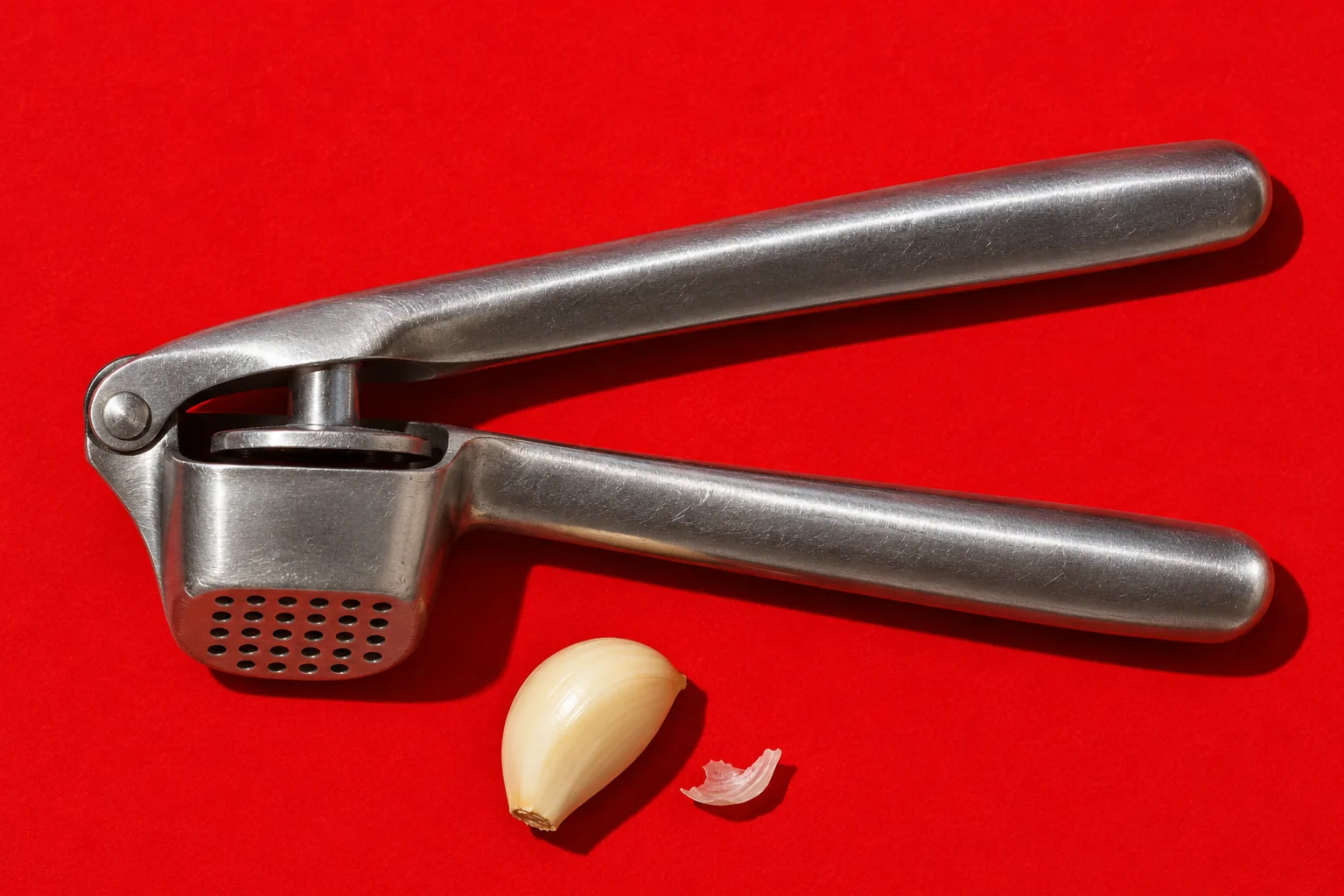
Pick the drawer you open in the middle of cooking. The useful measurement is its working space with a spoon, whisk or garlic press inside. A beautifully fitting tray can still stop the drawer from closing.
Open the empty drawer and measure the inside width and depth. Sketch the usable rectangle on scrap paper. Mark handles, a sloping back and any obstruction near the top. Fold paper to the height of a candidate tray to see whether there is clearance all the way in.
Think of the last meal you cooked. Place each tool you used on the paper, in the order you reached for it. Open tools with moving handles and leave a finger’s width beside whatever you lift most. Remove duplicates for the trial.
Use old boxes or folded card to mark proposed compartments. Load them and close the drawer gently, then put everything away one-handed. If it works for several meals, you have a template to compare against a retailer’s internal dimensions.
Overlapping angled compartments use height to free up drawer width